Squeezy McPressure here! I have a question for you. Have you ever changed a flat tire on your car or truck using one of these styles of jacks? One is a bottle jack, and the other is a rolling floor jack. Do you know how they generate enough force to lift a vehicle?
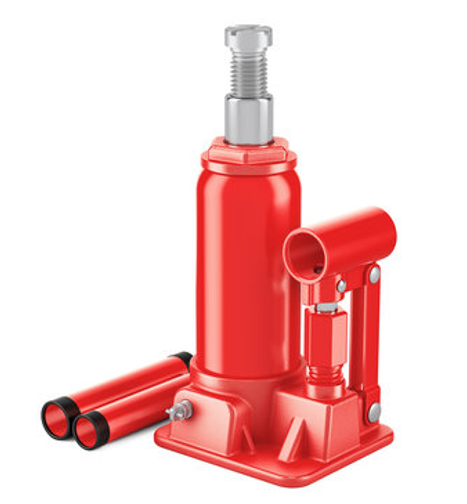
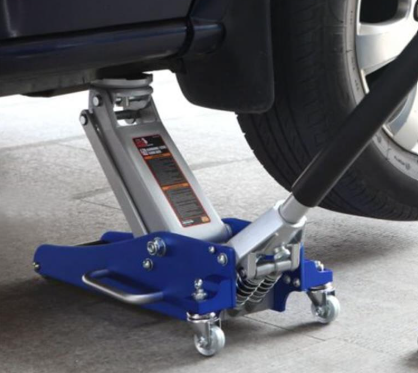
You guessed it — fluid power! Hydraulics, to be specific.
Hydraulic pressure is applied to the piston area in the bottle-jack style or to the cylinders that move the mechanical linkages in the floor-jack style. The manual lever pumps hydraulic fluid into the cylinder chamber.
And the principle that makes it all work? Pascal's Law.
Force = Pressure • Area
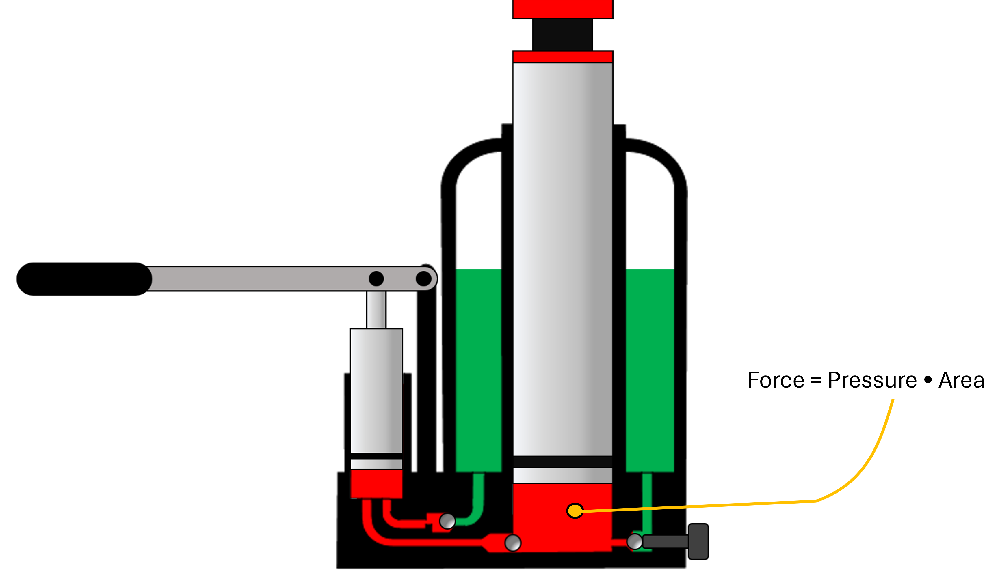
Pressure is applied to the area of the piston. As fluid is pumped into the cylinder, the generated force exceeds the load from the car or truck, and as a result, the vehicle is raised.
The effort required at the handle is significantly reduced because of the difference in area between the small pumping piston and the larger output piston.
A small input force can produce a much larger output lifting force.
So, the next time you're changing a flat tire, take a closer look at that jack. You're putting fluid power to work!
Until next time! - Squeezy
The final session of Fluid Power Fundamentals focused on the one component every hydraulic system depends on—but usually doesn’t get credit for until something goes wrong: the fluid. BJ wrapped up the series with a deep dive into hydraulic fluids, explaining that fluid does far more than just “move stuff.” In reality, it handles power transmission, lubrication, sealing, contaminant transport, and heat transfer—all while being expected to survive pressure, temperature changes, and whatever contamination the system throws at it.
Session 7 focuses on the parts of a hydraulic system that don’t always get much attention—until something leaks, fails, or doesn’t fit. BJ Wagner walks through hoses, tubing, fittings, and reservoirs, showing how these “in-between” components play a major role in system reliability. From proper sizing and identification to installation and selection, the session highlights how small details in fluid conveyance can make a big difference in performance (and headaches avoided).
If you’ve ever wondered how hydraulic systems manage to stay cool, efficient, and quietly brilliant under pressure (unlike some of us on a Monday morning), this webinar delivers the answers with clarity—and a few “aha” moments along the way. Mark Redmond walks through the essentials of hydraulic pump operation, from the foundational idea that pumps create flow—not pressure—to the nuanced role of variable displacement systems in modern applications. Along the journey, we explore everything from swash plates (which sound more fun than they are, but are far more useful) to pressure compensators that act like the ultimate control freak—in a good way. With practical examples, real-world comparisons, and a healthy appreciation for efficiency (and avoiding unnecessary heat—both mechanical and emotional), this session breaks down complex concepts into something surprisingly digestible. Whether you’re a seasoned fluid power professional or just hydraulically curious, you’ll walk away with a better understanding of how smarter systems save energy, reduce wear, and make everything run just a little smoother. Bonus: you may never look at a pump—or your coffee routine—the same way again.
Session 6 is where hydraulics finally gets to do what it was built for—move things. Cylinders push, motors spin, and suddenly all that pressure and flow starts turning into real work (instead of just numbers on a schematic). BJ Wagner walks through how actuators behave, why speed and force are always negotiating with each other, and how changing one setting can quietly affect everything else. From telescopic cylinders doing their staged “one thing at a time” routine to accumulators storing energy like a loaded spring, this session highlights how motion actually happens—and what can go wrong if it’s not controlled.
Session 5 is where everything starts coming together—valves stop being individual components and start acting like a full team (for better or worse). BJ walks through how different valve types interact in real circuits, how flow, pressure, and direction all influence each other, and why small setup details can have a big impact on performance. From synchronized actuators to load sense systems and accumulator circuits, this session highlights what actually happens when a system is running—not just how it’s supposed to work on paper.
Hydraulics are everywhere—even in places you might not expect. This post highlights five everyday systems that rely on fluid power, from vehicle braking systems to garbage trucks and aircraft landing gear. Whether you’re new to fluid power or already familiar with the basics, these real-world examples showcase how hydraulics quietly deliver powerful, efficient, and reliable performance in daily life.
Session 4 shifts into valves—the components that control pressure, direction, and flow (basically, the ones that decide if your system works… or just sits there). BJ breaks down the different types, how they function, and why small details like pressure settings and flow control can make a big difference in performance.
Session 3 is all about hydraulic pumps—the heart of the system and occasionally the reason your day gets complicated. BJ walks through pump types, how they actually move fluid, and why some are overachievers while others are just along for the ride. We also cover cavitation and aeration (aka the “your pump sounds terrible” phase), take a look inside gear, vane, and piston pumps, and talk about efficiency, pressure limits, and how not to accidentally shorten your pump’s lifespan. It’s part theory, part real-world reality—because in hydraulics, things always sound fine… until they don’t 😄
The fluid power industry is changing quickly, and professionals across the field are being asked to keep pace with new technologies, evolving equipment, and rising performance expectations. Whether working in hydraulics, pneumatics, maintenance, troubleshooting, design, or system support, today’s workforce needs up-to-date knowledge to stay effective and competitive. Employers are looking for individuals who can do more than rely on past experience alone. They want professionals who understand current standards, can adapt to industry changes, and are prepared to solve problems with confidence. In this environment, certification has become more important than ever because it provides a clear and respected way to validate technical knowledge and professional commitment.