RSS

Blog

All Around Us - Roadwork

Squeezy McPressure

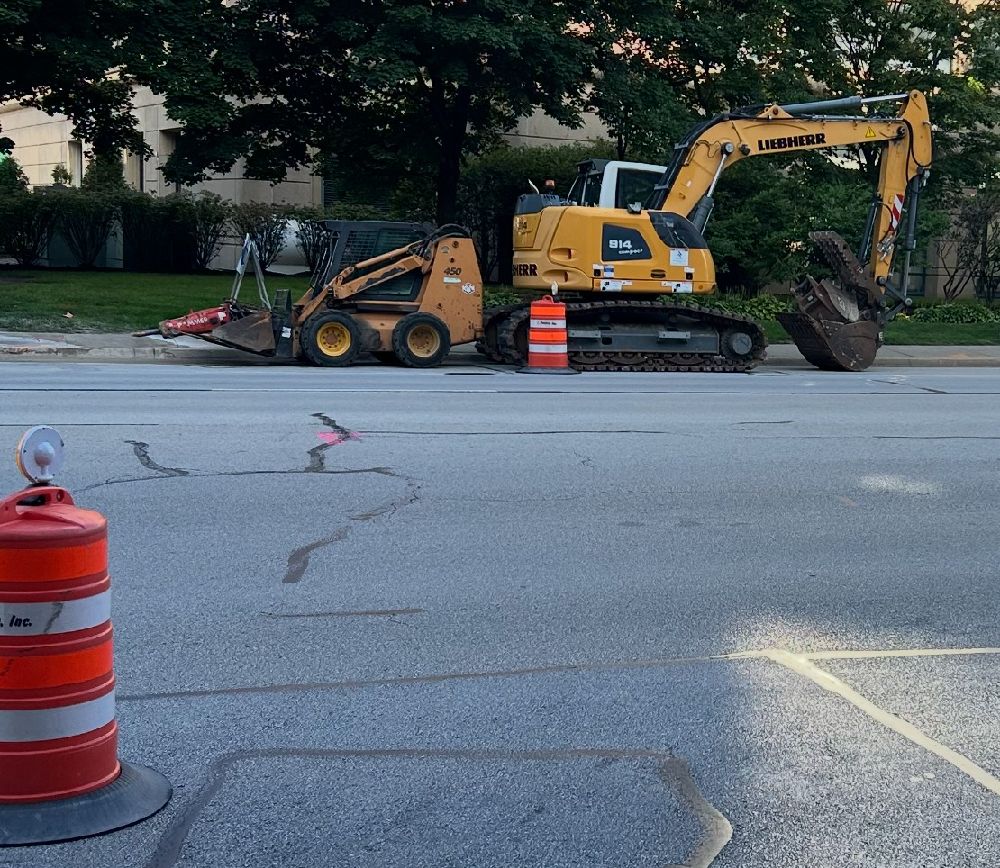
Squeezy McPressure here!  Did you know hydraulic and pneumatic systems are All Around Us?  Have you noticed any of the mobile equipment at any of those construction sites or road work areas where you sometimes get held up in traffic?  Have you ever wondered how the equipment operates?  From the ability to

 raise a bucket on a skid steer loader, to the ability to dig a hole with an excavator bucket, operate a jackhammer attachment to break up the asphalt, or even just propel the machine forward or reverse... All of these functions are powered by hydraulics.  Hydraulic fluid is pressurized to move the load on the cylinder, apply torque to the motor, or propel the machine forward and backward.  Mobile equipment uses a gas or diesel combustion engine to power a hydraulic system that operates various functions based on the specific machine in use.  Hydraulic systems are everywhere.  So next time you see a construction site, take a look to see how many machines you can identify that use hydraulic energy.  My guess is that it will be more than you initially think. 

Until next time!  - Squeezy"

All Around Us - Garbage Trucks

Squeezy McPressure here! Did you know hydraulic and pneumatic systems are All Around Us?

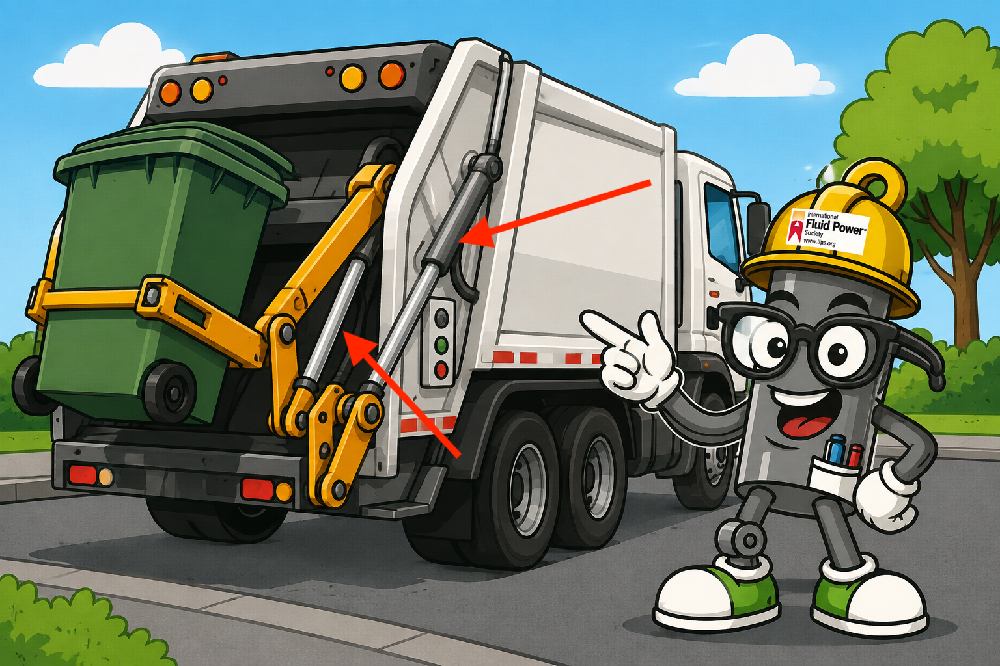
You’ve probably seen a garbage truck working its way through your neighborhood, but have you ever stopped to think about how it lifts those heavy trash containers?

Hydraulics to the rescue!

Many garbage trucks use hydraulic cylinders and motors to lift, tilt, and empty containers. Hydraulics can produce a tremendous amount of force in a relatively compact system, making them perfect for handling heavy loads.

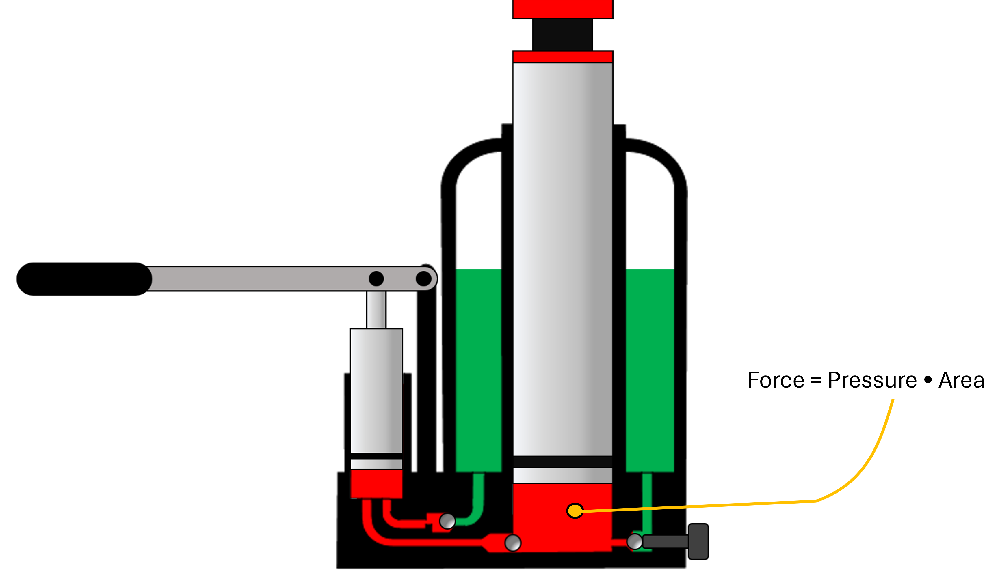
This is another great example of  Force = Pressure • Area

Hydraulic pressure acting on the area of a cylinder piston creates the force needed to raise the container. Depending on the truck, hydraulics may also operate the compactor that compresses the trash inside, allowing the truck to carry more material.

So, the next time you see a garbage truck picking up a container, take a closer look. You’re watching fluid power at work!

Hydraulics really are All Around Us!

Until next time!
– Squeezy

All-Around-Us - Amusement Rides
Did you know hydraulic and pneumatic systems are All Around Us? How many of you enjoy spending summer days with family at a theme park or on amusement rides?
All Around Us - Airline Jet Bridges
Did you know hydraulic and pneumatic systems are All Around Us? In one way or another, hydraulics or pneumatics can be linked to nearly everything we encounter in our daily lives. Take, for instance, travel.
Pascal’s Law - Who is this guy?
Did you know there is a fundamental principle applied to all hydraulic systems in operation today? This principle is known as Pascal's Law. Blaise Pascal was a 17th century French mathematician, physicist, and religious philosopher.
Prioritizing Safety in Your Workplace
In this post, we’ll look at why safety awareness should remain a daily priority and how IFPS resources, including Safety Courses, Safety Cards, and Safety Posters, can help companies reinforce safe practices across their teams
Fluid Injection Injuries: Fluid Power Safety Tips, Training, and IFPS Resources
Learn why fluid injection injuries are serious medical emergencies and how IFPS safety cards, posters, online training, and safety videos can help reduce risk.
Webinar Recap: On-Machine Hydraulic Testing: Finding Problems Before They Find You
This webinar explored the importance of on-machine hydraulic testing and why evaluating systems under real operating conditions leads to more accurate troubleshooting and performance validation. Rowan LaHue discussed essential testing tools, measurement best practices, data acquisition systems, and systematic troubleshooting methods, including a real-world load-sensing hydraulic system case study. The session emphasized the value of accurate diagnostics, proper documentation, and understanding system-level interactions to improve reliability, safety, and maintenance outcomes.
Fluid Power Fundamentals - Session 8 recap
The final session of Fluid Power Fundamentals focused on the one component every hydraulic system depends on—but usually doesn’t get credit for until something goes wrong: the fluid. BJ wrapped up the series with a deep dive into hydraulic fluids, explaining that fluid does far more than just “move stuff.” In reality, it handles power transmission, lubrication, sealing, contaminant transport, and heat transfer—all while being expected to survive pressure, temperature changes, and whatever contamination the system throws at it.
Fluid Power Fundamentals - Session 7 recap
Session 7 focuses on the parts of a hydraulic system that don’t always get much attention—until something leaks, fails, or doesn’t fit. BJ Wagner walks through hoses, tubing, fittings, and reservoirs, showing how these “in-between” components play a major role in system reliability. From proper sizing and identification to installation and selection, the session highlights how small details in fluid conveyance can make a big difference in performance (and headaches avoided).