Hydraulics Are Everywhere—Especially in Modern Farm Equipment
By Squeezy McPressure
From road-ready hay mergers to smoother tractor rides and faster implement changes, hydraulic systems are quietly transforming the way today’s machines work in the field.
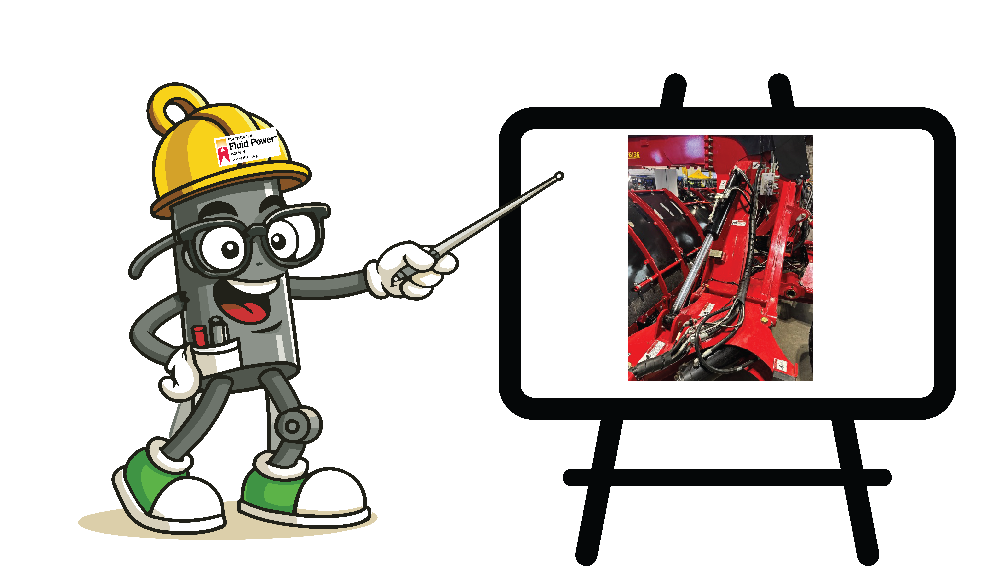
A quick look at real-world hydraulic applications in agriculture.
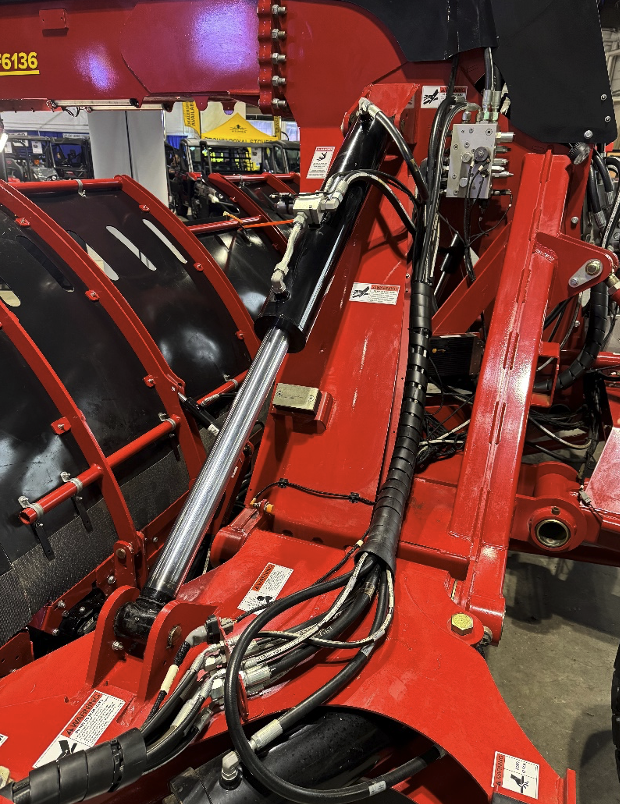
Hydraulics make it easy to move a hay merger from field mode into a transport position for travel between jobs.
When most people hear the word hydraulics, they picture cylinders and motors doing the heavy lifting on construction equipment. That image is not wrong, but it is incomplete. Across both construction and agriculture, hydraulics now do far more than power traditional machine functions. They are increasingly replacing manual adjustments, chain drives, belt drives, and fixed mechanical linkages with systems that are faster, more precise, and easier to automate.
That shift matters in the field. Operators want machines that can be adjusted on the go, set up quickly, and tuned for changing crop and ground conditions. Hydraulics help deliver that flexibility. They provide smooth motion, controllable force, and simple integration with tractor controls, making them a natural fit for equipment that has to perform efficiently in real-world working conditions.
1. Faster Reconfiguration in the Field
One clear example is a pull-behind hay merger used on large-scale hay and dairy operations. Instead of relying on slower or more cumbersome mechanical adjustments, hydraulics allow the machine to be reconfigured quickly into a transport position.
That means less downtime at the edge of the field and easier road travel between locations. For operators moving frequently from one field to another, that convenience becomes a productivity advantage. The ability to transition from working position to transport position with speed and consistency is exactly the kind of practical improvement hydraulics bring to modern equipment design.
2. Better Ride Quality for the Operator
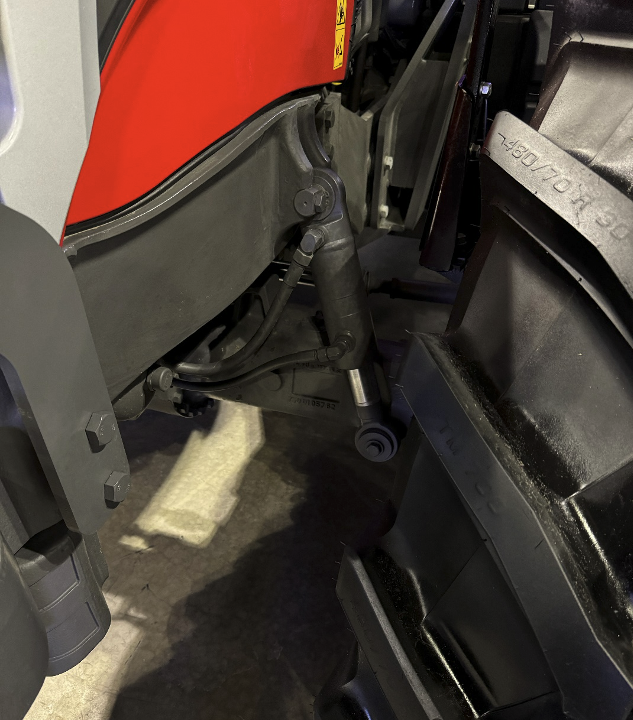
Hydraulic suspension can improve operator comfort and machine control when crossing rough ground.
Hydraulics are also being used to improve ride comfort. On rough terrain, a tractor can transfer a lot of vibration and shock to the operator. Hydraulic suspension systems help absorb that movement, creating a smoother ride across uneven ground.
Comfort is not just a luxury. Reduced shock and vibration can lower operator fatigue over long hours in the cab, while also helping maintain better control and confidence in the machine. In busy seasons, small improvements like that can make a big difference over the course of a long day.
3. Easier Steering, Less Operator Effort
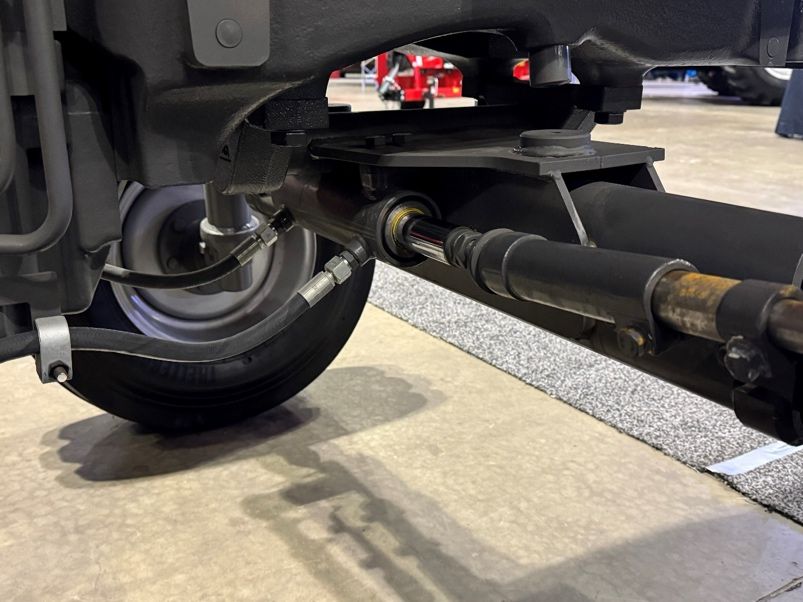
Hydraulic assist steering reduces the effort required to control agricultural tractors and similar machines.
Another familiar application is hydraulic assist, or power steering, on an agricultural tractor. Steering a machine in field conditions can demand a great deal more than steering a passenger vehicle. Added load, variable traction, and rough surfaces all increase the effort required from the operator.
Hydraulic steering assistance helps manage that load. The result is more responsive handling and less physical strain, especially during repetitive maneuvers or long working days.
4. Quicker Implementation of Changes
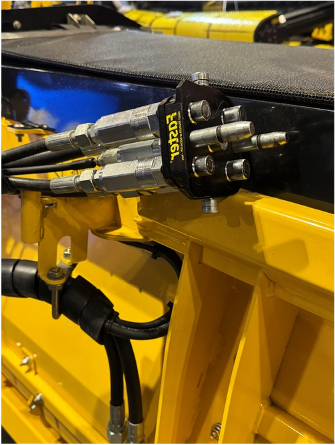
Multipoint hydraulic quick couplings speed up header changes while keeping hydraulic connections neat and efficient.
Hydraulics also support faster service and setup. A multipoint hydraulic quick coupling on a forage harvester header allows the operator to remove or change heads quickly, easily, and efficiently. Instead of spending valuable time managing multiple separate connections, the system streamlines the changeover process.
That kind of design helps reduce delays, simplify operation, and keep machines productive when changing from one task to another. In high-throughput harvesting work, time saved during setup is time put back into the job.
5. Replacing Mechanical Drives with Hydraulic Motion
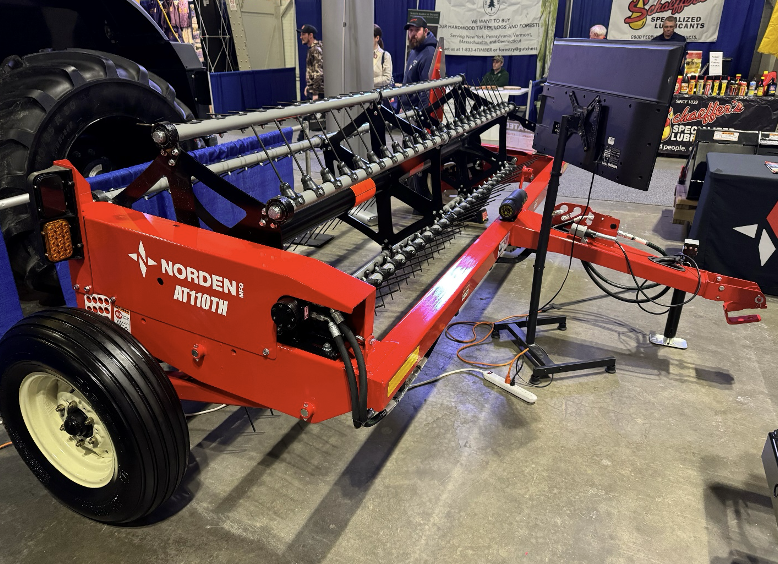
On this hay tedder, hydraulics replace a ground or PTO drive to control reel rotation and engagement.
In some cases, hydraulics are replacing ground-drive or PTO-drive systems altogether. A hay tedder is one example, where hydraulics can be used for reel rotation and for engagement or disengagement of the reel. That offers a more direct, controllable way to manage machine function.
Compared with older mechanical arrangements, hydraulic systems can improve adjustability and make it easier to integrate machine functions with broader control systems. As automation continues to expand, applications like this will only become more common.
Why This Matters
Hydraulics are no longer just a support technology tucked inside large machines. They are becoming a key part of how agricultural equipment is adjusted, transported, controlled, and automated. Whether the goal is comfort, precision, speed, or flexibility, hydraulic systems are helping equipment manufacturers deliver smarter solutions for modern operations.
Stay tuned for more examples of hydraulic applications in an upcoming post. Until next time, Squeezy McPressure signing off.